JA
JA
Rapidly decreasing eelgrass bed habitats
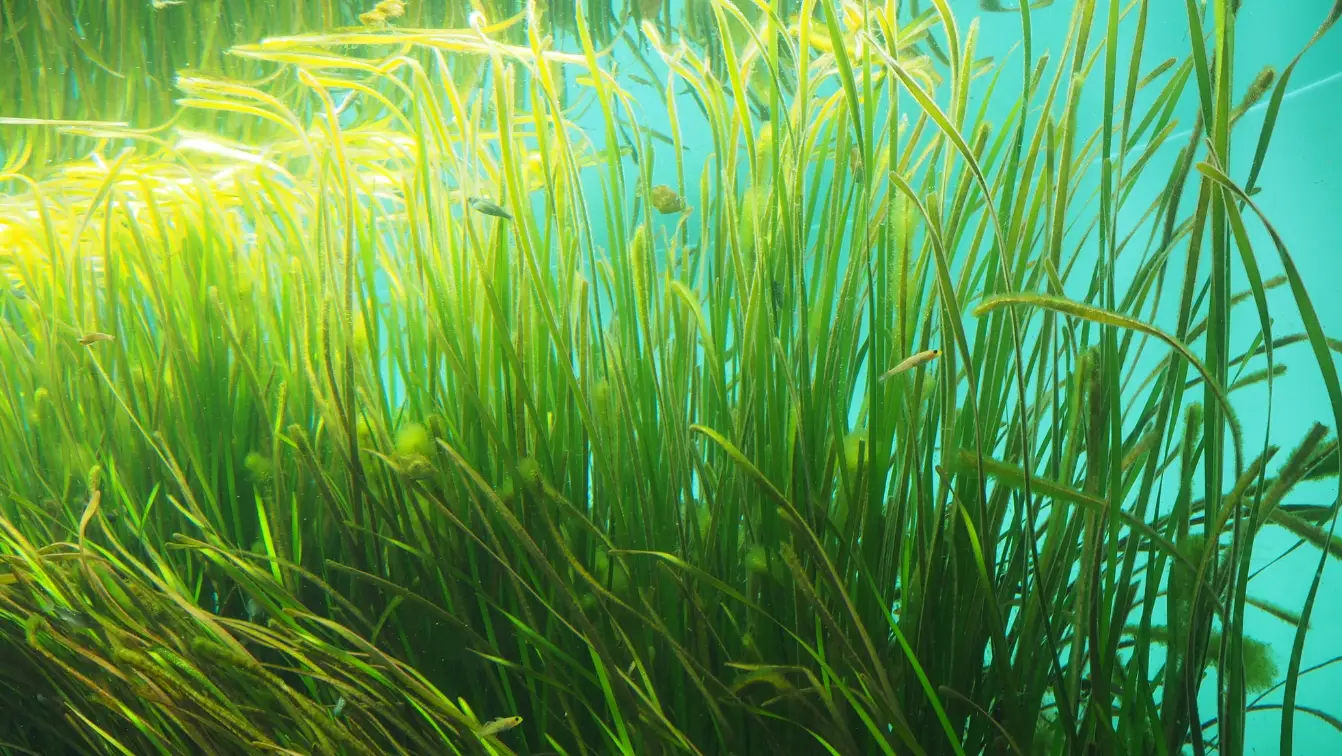
Eelgrass is a seed plant of the family Zosteraceae, a group of marine seagrasses that thrive in sandy, shallow bays and estuaries. Found throughout Japan, its ribbon-like leaves provide habitat for small fish and crustaceans. Eelgrass absorbs phosphorus, nitrogen, and other nutrients from seawater, supporting marine life while improving the water quality. Through photosynthesis, it also absorbs carbon dioxide and produces oxygen, benefiting both marine ecosystems and human society. In addition, eelgrass meadows are gaining attention as blue carbon ecosystems, as dead seagrass on the seabed acts as a long-term carbon sink.
However, the United Nations Environment Program (UNEP) and other organizations report that seagrass beds worldwide, including eelgrass, are being lost at rates of up to 7% per year. This pace is beyond nature’s ability to recover, making active human intervention essential for their survival. As a company that has long benefited from the ocean’s bounty, preserving these vital ecosystems is a critical priority for Maruha Nichiro.
Protecting the “nursery of the sea” means protecting what’s right in front of us
Maruha Nichiro began actively participating in eelgrass bed restoration in Tokyo Bay in 2014, when we became a cooperating company with the NPO Association for Shore Environment Creation. The following year, our involvement deepened as many employees and their family members joining the initiative. In 2016, we further expanded our role by becoming a cooperating company in the Tokyo Bay UMI Project, supported by the Japan Ministry of Land, Infrastructure, Transport and Tourism (MLIT).
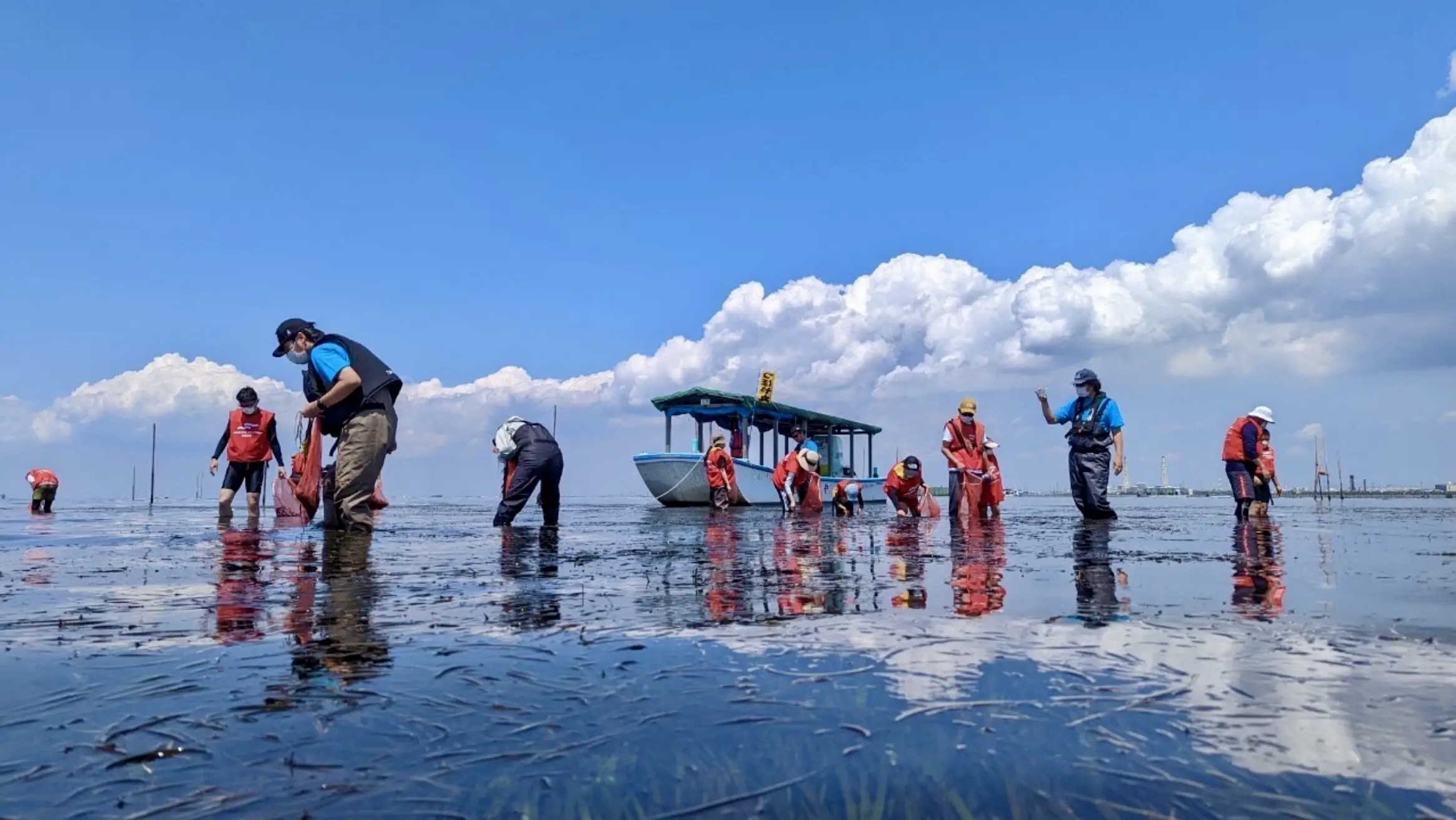
Employees and their family members continue to volunteer every year, collecting seeds from flowering shoots at Kaneda in Kisarazu, Chiba Prefecture; Yokohama Marine Park in Kanagawa Prefecture; as well as other coastal areas. The flowering shoots are carefully maintained and sorted, and the harvested seeds play a critical role in restoring the eelgrass beds. Maruha Nichiro is deeply involved in every stage, from seed collection to sowing, supporting the entire regeneration cycle.
While some years saw activities limited by severe weather or the COVID-19 pandemic, cumulative participation has already reached the hundreds. Many employees continue to take part because Maruha Nichiro has a deeply rooted sense of responsibility: as a company that depends on the ocean’s bounty, we have a fundamental duty to take care of it. Standing on the seashore with the ocean extending to the horizon serves as a strong reminder of our origins.
Although many participants initially volunteered out of a desire to contribute, perspectives have shifted. The initiative is now widely recognized as essential to protecting the very foundation of our business. Today, we promote the eelgrass bed revitalization efforts as a symbol of our CSV (Creating Shared Value) management, which aims to simultaneously generate both social and corporate value.
Participating in these activities has also allowed us to observe the local communities where there are some serious concerns. Coastal populations are declining, and fewer people are entering the fishing industry. As a result, there are fewer individuals to watch over the ocean and notice when changes start to occur.
Seaweed beds are essential to local marine resources, and healthy beds are closely tied to the sustainability of surrounding habitats. In short, seaweed beds and local communities are inextricably linked, and one cannot exist without the other. Restoring seaweed beds requires a coordinated effort by companies, communities, and governments to steward ocean habitats.
A solutions company protecting the Earth
In March 2026, Maruha Nichiro will change its name to Umios and be reborn as a solutions company that innovates value from ocean resources to deliver food that supports the health of both people and the planet.
This name change is not simply a rebranding. It is a declaration of our commitment to transforming our relationship with the Earth. We aim to become more than a company that harvests, uses, and supplies marine resources. Restoring eelgrass beds symbolizes our future approach to business as a protector of the habitats supporting thriving and regenerating ocean resources.
We are committed to contributing to protecting and restoring ocean environments because our company can only exist with a healthy ocean. These efforts are the fundamental embodiment of our corporate purpose of “For the ocean, for life.”
The realization of what "we can't find seeds" really means for now and the future
In 2025, while conducting our eelgrass restoration activities, we observed the stark change in the coastal habitat compared to a decade earlier.
In previous years, we collected flowering eelgrass shoots in early summer, then raised and sorted them for sowing. Last year was different from the very first step. The number of flowering shoots had declined dramatically. High water temperatures, unseasonable weather, and irregular impact from foraging marine life made it extremely difficult to collect the shoots needed to promote restoration of the beds.
Faced with these unforeseen circumstances, this year we decided to change course. Instead of focusing on Zostera marina eelgrass, we shifted our conservation and restoration efforts to Zostera japonica (Japanese eelgrass), which also supports shallow-water ecosystems, including those of Zostera marina.
The need to shift the focus of our activities has become a valuable opportunity to confront the current realities of the ocean. The difficulties we faced in eelgrass restoration underscored the importance of adopting new perspectives on how to conserve Japanese eelgrass. Adapting our efforts to actual ocean conditions will provide important lessons for our activities, our business, and our company.
Seagrass bed restoration does not follow a fixed formula where the same steps always produce results. It is influenced by sea temperatures, weather patterns, marine life movements, and many other factors beyond human control, and conditions can change noticeably within just a few years.
That is why our experience this year is so meaningful. We learned the importance of remaining flexible in the face of unpredictable change. This adaptability is essential for a company that works with ocean resources and will be a key focus for us as Umios in the future.
Working with the ocean for the next 100 years
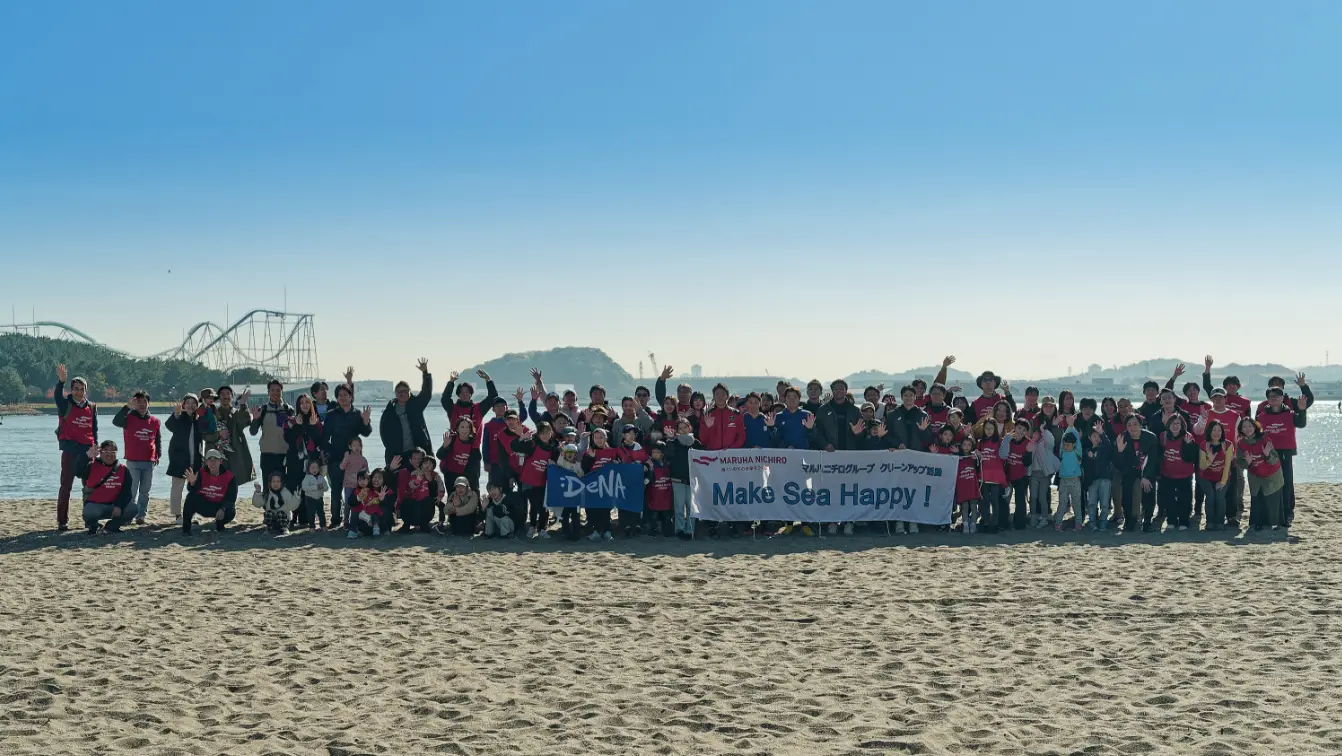
We are adopting the name Umios to reflect our strong commitment to pursuing and delivering solutions to future issues, such as population decline and climate change. Our efforts to restore eelgrass beds exemplify our ongoing engagement with the ocean and society.
The true value is not the amount of eelgrass we increase, but the process of directly facing the challenge of a changing climate and committing to every possible effort until a workable solution emerges.
The firsthand experiences of our employees at the ocean sites will shape our business model, how we communicate our value, and how we operate as a company committed to working in harmony with the ocean. The eelgrass restoration efforts help protect the environment and also serve as a catalyst for organizational transformation, nurturing the core identity of Umios.
We bring seasonal fish to the table while protecting the ocean’s nurseries where fish grow. These two responsibilities are inseparably linked and together support a future with a healthy ocean and healthy people.
The eelgrass restoration project serves as a test site where employees, their families, NPOs, local communities, governments, and others who share a commitment to the ocean come together to consider what kind of ocean we will pass on to the next generation. Together, we are taking action to restore declining marine vegetation and preserve the “nursery of the sea” for the next 100 years. The ocean has long been the foundation of our business, and we are committed to continuing to live in harmony with it. These efforts will benefit not only our company, but all those whose livelihoods depend on the ocean. Through this work, we are laying the groundwork for a flourishing future.