
 JA
JA
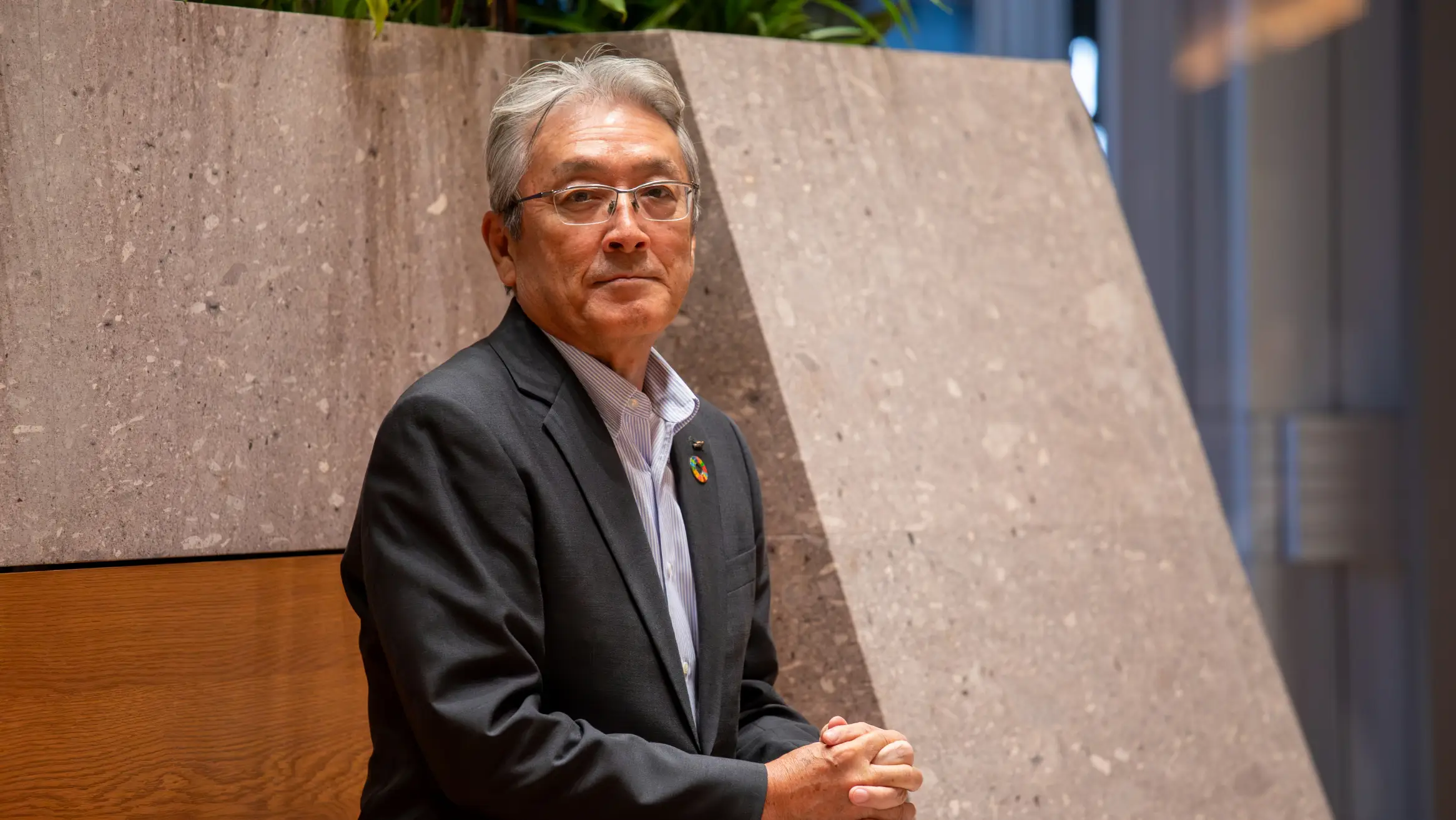
What we can do to meet each individual’s nutrition needs
With the global population rapidly approaching 10 billion, securing access to high-quality protein is becoming a worldwide challenge. In Japan, a rapidly aging population is driving up medical costs and increasing the burden of nursing care. As a result, healthcare is shifting from treating illness after it occurs to improving health in order to prevent disease.
At Maruha Nichiro, thinking about how we can directly address the challenges of protein supply and consumer health has led us to a clear conclusion: we need to do more to communicate the full value of fish as a health food.
That is why we are transforming from a business centered on processing and delivering seafood products into one that uses its technologies to unlock the full health-promoting value inherent in fish.
One technology we are developing removes the naturally “fishy” odor from DHA (an omega-3 fatty acid) and other functional ingredients found in fish. By neutralizing this odor, fish becomes more appealing to people who have avoided it in the past, making it easier for a wider range of consumers to include fish as a regular source of nutrition.
A new era of personalized superfoods is also on the horizon. We are moving beyond food that is simply good for everyone toward an era where people expect nutrition optimized for their individual needs. I want our company to fuse our digital and food technologies to deliver food solutions tailored to each individual’s health condition and eating habits. Rather than food that helps overcome illness, our products will be a natural part of everyday diets, created to help prevent illness in the first place. We want Umios to be an integral part of this revolution in health maintenance.
"We are not only focused on supporting human health. Pets are also important members of families, and the food they eat is essential to their well-being. In our pet food business, we view the food we provide not simply as nourishment, but as something that supports the mental health of pets, their owners, and society as a whole. We are developing pet food that is both palatable and functional. We believe we have an important responsibility to apply the same high quality standards used for human food products to pet food. Our goal is to create products that are gentle on the kidneys and that deliver the joy of eating even when appetite is low, helping beloved pets stay healthy and enjoy long lives with their families.
Solutions for conserving limited resources and protecting the global environment

Our planet has a limited amount of natural resources. In addition, climate change is causing sea temperatures to rise, which is seriously impacting fish stocks and fishery operations.
We are pursuing solutions that will enable sustainable fishery stocks without excessively depending on the naturally occurring ocean resources. One solution we are advancing uses cutting-edge technology to produce cultivated seafood products.
Cultivated seafood grown from fish cells in a controlled environment. While cultured fish meat remains expensive today, we are advancing technologies to make it a practical reality. Using current methods, a single piece of sushi would cost around ¥5,000. Within the next 10 years, we aim to reduce that cost by about 90%, making cultivated seafood viable as a slightly higher-priced premium offering at conveyor-belt sushi restaurants in the near future.
We also see significant potential for combining this with 3D printing technology to produce cultivated seafood that is boneless or presents attractive new shapes. The possibilities are vast and could create a completely new source of protein for everyday consumption.
We are also working to protect the blessings of the sea that exist today. We have begun full-scale aquaculture of sugi, a cobia species that thrives in the higher water temperatures expected with global warming, and we are pursuing the distinctive brand strategy of obtaining sustainability certification for all of our seafood products. At the same time, we are exploring every possible avenue to ensure sustainability in any future environment.
Together, the blessings of nature, advances in aquaculture, and cultivated seafood will give us the means to realize our vision to sustainably deliver the protein needed to support a global population of 10 billion people.
Ensuring the profitability of the Japanese fishing industry and providing supply chain transparency
Japanese fisheries are facing a structural crisis. The fish they catch often do not command prices high enough to sustain their businesses. Fishermen’s incomes are low, and fewer people are choosing to become fishermen to enter the profession and carry it forward. The harsh reality is that these conditions are making the industry unsustainable.
What lies behind these conditions? One major factor is that fish prices in Japan do not reflect their true value.
The same fish sold in Europe or the United States can fetch prices that are 30% higher or more than in Japan. A key difference is the level of traceability, which provides buyers with clear information about when, where, by whom, and how the fish was caught. Fish accompanied by accurate data and harvested under proper resource management practices are recognized as having greater value.
Some Japanese fisheries still rely on an outdated practice of catching fish when they are available while failing to record sufficient data. A fish may taste excellent, but without evidence that it was harvested in a sustainable manner, markets around the world will not assign it proper value.
That is why improving the transparency across the seafood supply chain is so important to us. We believe transparency can be achieved through digital “visualization” of data. One possible solution would be for fishermen to photograph their catch on board using a smartphone. AI could then identify the fish species and size, and that information could be shared instantly and seamlessly throughout the distribution chain. We believe this visualization offers a simple, easy-to-implement solution.
Proper resource management will deliver three positive outcomes. First, it will enhance the brand value of fish and expand exports. This, in turn, will lead to higher incomes for fishermen and encourage new generations to view fishing as a profession with a future. Finally, these practices will help protect our oceans. We are committed to implementing these practices to deliver win-win-win outcomes that contribute to protecting our oceans.
Our Company is a member of the Seafood Business for Ocean Stewardship (SeaBOS), a global initiative that brings together fisheries companies and scientists to eliminate illegal fishing and to establish science-based international rules.
We take a global perspective on natural resource management and actively promote initiatives tailored to the characteristics of each region. In North America, our business model spans the entire natural resources supply chain. In Europe, we deliver high value-added products reflecting local health priorities. And in Africa, we are developing protein sources to support rapidly growing populations.
At Umios, our business field encompasses the Seven Seas, and our mission is to protect the world’s oceans and the people who depend on their resources. Now is the time to pursue a new path for revitalizing Japan’s fishing industry so it can continue to provide value to the world.
Creating a new future for food together with society
We are becoming more than a company that provides seafood. We are transforming into a company that delivers solutions to society’s needs. Our journey began with a single ship 145 years ago, and today we are embarking on a global voyage that will carry us into the future.
How can we harness the blessings of the sea to address the pressing challenges of our time, including climate change, limited natural resources, and health concerns? Our purpose, and our mission as a company, is to find solutions while preserving healthy and abundant oceans for future generations, so they can continue to nourish both the bodies and spirits of people around the world. To achieve this, we must keep advancing our technologies, question conventional wisdom, and never stop challenging ourselves.
The ocean is the source of all life. We will bring its infinite possibilities to tables around the world.
We are setting sail into an uncharted future.
Join us as Umios navigates toward new horizons.